
If you are considering geothermal heating and cooling in Ohio, you are probably wondering how much it costs and whether it is actually worth it. In 2026, most homeowners spend between $20,000 and $40,000 for a full geothermal system. While the upfront cost is much higher than that of traditional HVAC systems, the long-term value comes from lower energy bills and system longevity that exceeds that of standard equipment.
What Drives Geothermal Cost in Ohio
Geothermal systems vary widely in price because installation depends heavily on your property, not just the equipment. The largest portion of the cost comes from installing the underground loop system, which transfers heat between your home and the earth.
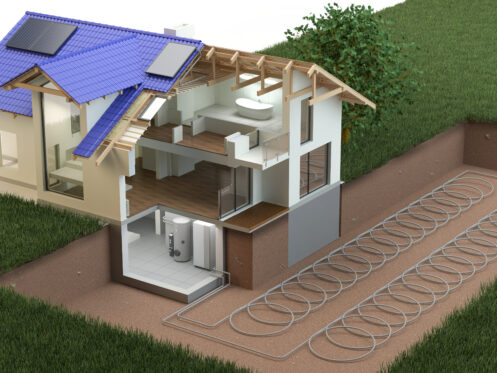
In Ohio, several factors influence the final price. Soil conditions have a major role, since rocky or compact soil can make excavation more expensive. The size of your yard also determines whether installers use horizontal trenching or vertical drilling. Horizontal systems usually cost less but require more land. Vertical systems work better for smaller lots but increase installation cost.
System size also affects pricing. Larger homes require higher-capacity systems, which increases both equipment and installation expenses. Most homes need a system between two and five tons, with costs rising for each additional ton. Retrofitting an existing home can also increase costs. If your ductwork needs modification or replacement, that work will increase the overall investment. New construction projects tend to cost less because installers can design the system from the ground up.
Typical Cost Ranges for Different Scenarios
Geothermal pricing depends on the type of installation and the complexity of the project. Understanding these ranges can help you set more realistic expectations. A smaller home with favorable soil and a horizontal loop system will fall between $15,000 and $25,000. These projects tend to involve easier excavation and need fewer modifications.
Mid-range installations for average-sized homes tend to land between $20,000 and $35,000. This range reflects most residential projects where we need to balance system size, loop design, and site conditions. More complex installations can cost more than $40,000, especially when the design requires vertical drilling or soil conditions are more challenging. Some high-end projects will even exceed $50,000, though this is less common.
Upfront Cost vs Long-Term Energy Savings
The biggest reason to consider geothermal systems lies in long-term savings. While the initial investment will be higher, the operating costs tend to be much lower than with traditional systems. Geothermal systems use stable underground temperatures to efficiently heat and cool your home. This allows them to reduce energy consumption by up to 50% compared to conventional HVAC systems.
Lower energy use translates into lower utility bills. In Ohio, heating and cooling costs often account for a large share of your energy expenses. A geothermal system can reduce those costs year-round. Over time, these savings will go a long way towards offsetting the initial investment. Many systems reach a break-even point within 10 to 15 years, depending on usage and energy prices. After that point, the system continues to deliver savings for the remainder of its lifespan.
System Lifespan and Long-Term Value
Geothermal systems stand out because of their durability. The underground loop system can last for 50 years or more, while indoor components typically last 20 to 25 years. Traditional HVAC systems require replacement every 10 to 15 years, which means you may replace a conventional system two or three times during the life of a geothermal system.
Reduced maintenance needs also contribute to long-term savings. Geothermal systems have far fewer exposed components, meaning they experience less wear from outdoor conditions. Routine maintenance still matters, but the system generally requires fewer repairs. When you combine durability with energy savings, the total cost of ownership becomes more favorable than with traditional systems.
Increased Home Value in Ohio
Installing a geothermal system can also increase your home’s resale value. Buyers often view energy-efficient systems as a major benefit, especially when your home has high heating and cooling demand. In Ohio, where seasonal temperature swings can be extreme, an efficient system adds comfort and cost savings. This tends to make your home more attractive in the real estate market.
Studies show that energy-efficient upgrades can increase your home value significantly. A geothermal system serves as a selling point because it has better longevity and lower operating costs. Buyers recognize the benefit of avoiding frequent HVAC replacements and high utility bills.
Incentives, Tax Credits, and Financing
One of the most important factors that improves geothermal affordability is the availability of incentives. Federal tax credits currently allow you to claim a percentage of installation costs, reducing the total investment. These incentives can cover 30% or more of the installation cost, depending on current programs and eligibility. This can lower an expensive system to a much more manageable price.
Local utility programs and state incentives will also provide additional savings. These vary by location, but they can further reduce upfront costs. Additionally, financing options make geothermal systems more accessible by allowing you to spread the cost over time.
When Geothermal Makes the Most Sense in Ohio
Geothermal systems work best in situations where long-term savings and consistent performance matter most. If you plan to stay in your home for many years, the investment becomes easier to justify. Homes with high energy bills often benefit the most. If your current heating and cooling costs are high, the potential savings from geothermal can make a major difference.
Properties with enough land for horizontal loop installation will also be able to reduce upfront costs. This makes geothermal more affordable compared to properties that require vertical drilling. New construction projects provide another ideal opportunity. Installing geothermal during the building process can reduce costs and simplify system design.
When Geothermal May Not Be the Right Fit
Despite its advantages, geothermal is not going to be the best choice for everyone. The high upfront cost can be a barrier for you, especially if you plan to move in the near future. Homes with limited outdoor space may require vertical systems, which increase installation cost. If your current HVAC system works efficiently and your energy bills remain low, the financial benefits of geothermal may take longer to realize.
Is Geothermal Worth It in Ohio?
Geothermal heat pump systems come with a high upfront cost, but they deliver long-term value through lower energy bills and exceptional system longevity. If you plan to stay in your home long enough to benefit from those savings, geothermal can be one of the most effective investments to make. At Gene’s Refrigeration Heating & Air Conditioning, Plumbing & Electrical, we have been the go-to HVAC system expert in the Medina area for decades. Contact us today to book a heat pump installation.