
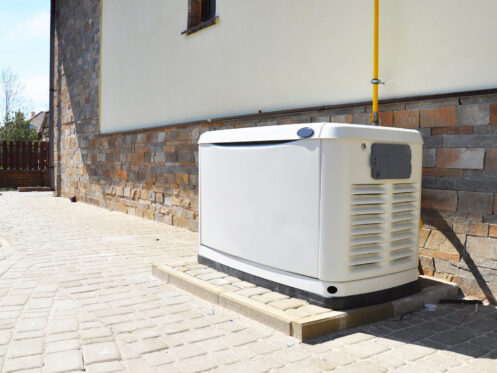
Power outages are always a concern, especially during the cold winter months. Having your power go out in the winter can leave you with no way to heat your house, unless you have a wood-burning fireplace. Not having heat is obviously an issue in terms of comfort, but freezing temperatures also put your pipes at risk of freezing and potentially bursting. Not being able to cook and not having hot water pose problems, too. A larger concern is whether anyone in the household has a medical device. Installing a standby generator allows you to prepare for winter power outages and avoid all these issues. The generator is wired directly to the house’s electrical system, enabling it to supply power to the most crucial circuits or potentially even the entire home.
What a Standby Generator Is (and How It’s Different From a Portable Generator)
A standby generator is permanently installed outside the house and designed to provide automatic backup power whenever an outage occurs. A portable generator can be useful during an outage, but a standby generator is safer and provides a more reliable source of power.
A standby generator is connected to the home’s electrical panel via a device known as an automatic transfer switch (ATS). The ATS constantly monitors the power coming from the grid, allowing it to instantly detect when the power fails. When an outage occurs, the ATS immediately signals the generator to turn on and start sending power to the house. It also temporarily disconnects the house from the grid to prevent the power the generator produces from bleeding back out into the grid. The generator will continue running until the ATS detects that power is again flowing through the grid, at which time it will signal the generator to turn off.
The fact that a standby generator will run automatically makes it far more convenient than a portable generator. A standby generator also has a steady fuel source (either the home’s natural gas supply or a large propane tank), ensuring you don’t need to worry about refueling it during the outage.
What a Standby Generator Can Power During a Winter Outage
A standby generator can power all the crucial things in a home, including the heating system and thermostat, refrigerators/freezers, and other essential kitchen appliances, lights, Wi-Fi, device chargers, and whatever else you may need. If you have a sump pump or well pump, you can also use the generator to keep it running during an outage.
Load planning is a key step when installing a standby generator. This involves determining the power demand of everything you may need to use during an outage to ensure that you choose a generator that supplies enough electricity to meet these needs. If the generator is too small, it could become overloaded, causing it to shut down. You have two options when considering what size of generator you need. The first is to opt for a whole-home generator that is powerful enough to run everything in your house. The other option is to install a smaller unit that only supplies the essential circuits. While this is less expensive, it generally means you’ll only be able to use the lights and outlets in certain parts of the house.
Why Standby Generators Are Especially Helpful in Winter
A standby generator provides numerous benefits during a winter outage, such as allowing you to run your heating to maintain a stable indoor temperature and reduce the risk of frozen pipes and water damage. The generator also prevents hazards that can occur, causing you to rely on unsafe alternative heating sources. The other major benefit is that the generator will keep critical safety systems running, such as lights, medical devices, smoke alarms, and carbon monoxide detectors.
Key Factors to Consider Before Installing a Standby Generator
The biggest factor when installing a standby generator is sizing it based on home load and around your priority needs. This should be done in consultation with an experienced electrician who can properly determine your electrical load requirements. When evaluating the house, the electrician will focus on the capacity of the electrical panel and determine which circuits are the most critical.
You also need to consider whether you want to run the generator off natural gas or propane. Natural gas is less expensive and provides a limitless source of fuel. With propane, the number of hours that you can run the generator depends on the size of the propane tank.
The other essential thing to note is that there are specific requirements for standby generators set out by the National Electrical Code. The unit must be installed by a licensed electrician and be connected to the house through a transfer switch. There are also requirements regarding location to ensure that exhaust fumes don’t seep into the house. Before the installation, you’ll need to get an electrical permit. Everything then needs to be inspected by the city or county once the installation is complete.
Maintenance Tips to Keep Your Generator Ready
Maintenance is crucial for keeping a standby generator in proper working order so that it always runs whenever you need it. All manufacturers have a schedule that explains the specific maintenance requirements. This includes replacing the oil, oil filter, air filter, testing the spark plugs, and checking the battery. You should also routinely test or “exercise” the generator to ensure it works correctly and that no issues are present. Some manufacturers recommend doing this weekly, while others suggest doing it once a month or every two weeks.
Keeping the unit and the area around it clear of snow, ice, and debris is also essential for ensuring that it has proper airflow and that the exhaust isn’t blocked off. It’s always recommended to schedule professional preventative maintenance before winter to make certain that you’re fully prepared for any storms that could knock out the power.
When to Call a Pro For Generator Help
Enlisting the help of an experienced, licensed electrician is a crucial step for determining what size generator your home needs. Hiring an electrician is equally important when installing the transfer switch and wiring the generator to ensure everything conforms to electrical code requirements. A professional can also handle your maintenance needs and help with any winter preparedness upgrades. If the generator won’t start, won’t stay running, or shows any warning lights or error codes, you should immediately seek professional help to get it working again or avoid any potential damage.
Stay Warm, Safe, and Powered Through Winter Storms
Having a standby generator for winter is the first line of defense against power outages. It provides peace of mind knowing that you can keep your house warm and your family safe. Winter outages can wreak havoc if you’re not prepared, potentially resulting in safety concerns or plumbing issues that can cause significant damage to the home. At Gene’s Refrigeration Heating & Air Conditioning, Plumbing & Electrical, we’re ready to help ensure you have a reliable winter power outage backup system. We offer quality standby generators from top brands and will help you choose the right one for your home. To schedule a standby generator consultation in Medina, contact us today.