
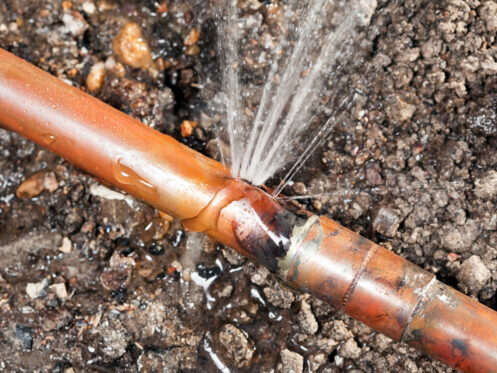
A burst pipe is one of the worst plumbing problems you can experience due to its potential to cause extensive and costly water damage. Pipes most commonly burst as a result of water inside them freezing. If a pipe that isn’t frozen bursts, it’s often a sign of aging plumbing that’s severely weakened or starting to fail. Simply replacing the pipe that burst will temporarily solve the problem.
However, if your plumbing is failing, and you repair only the damaged section, you’ll often encounter repeated leaks in the future. This is why whole-home repiping usually makes more sense than just performing a spot repair if your plumbing is fairly old and not in great condition. The process is fairly involved, as it requires removing and then replacing the existing supply lines. However, it’s something that can really pay off by lessening the chances of leaks and other major plumbing problems.
Why Pipes Burst in the First Place
In places like Ohio that frequently experience freezing weather during the winter, there’s always the risk of pipes freezing and bursting. Water expands when it freezes and turns into ice, and this expansion can exert so much pressure on the walls of a pipe that it suddenly ruptures or splits. This issue is especially common with exposed pipes in colder areas like a basement, crawl space or attic, which is why it’s important to properly insulate pipes in these areas.
As pipes age, there is also an increased risk that thery will burst as a result of weakened joints or the pipe deteriorating due to corrosion. High water pressure is another concern, as it leads to increased turbulence that can thin the pipe or cause a solder joint to come loose.
When a Repair Is Enough vs. When Repiping Is the Smarter Move
Whole-house repiping after a burst pipe isn’t necessary in every situation. For instance, if a frozen pipe bursts, or there’s just a single isolated failure in an otherwise healthy plumbing system, all you need to do is have a plumber replace the damaged section.
If your plumbing has multiple leaks, pinhole leaks keep forming or widespread corrosion is present throughout much of your plumbing, whole-house repiping is always the better solution. We also recommend repiping is if you have old galvanized pipes due to the risk of lead leaching into your water. Polybutylene piping or deteriorated copper pipes also need replacing due to the high risk of frequent leaks.
Repiping your house is a fairly costly undertaking, but it’s generally worth the price in any of the situations we just mentioned. The biggest concern with aging plumbing is that a pipe may burst when you’re not home to shut the water off, potentially resulting in thousands or even tens of thousands of dollars in damage.
Signs Your Home May Need Whole-House Repiping
When evaluating whether repiping is worth it, you need to consider the overall age and condition of your plumbing. Frequent leaks or having needed to repair pipes in multiple parts of your house in the past are obvious signs that your plumbing is in poor condition and needs replacing. Visible corrosion on your pipes, discolored water or water with a metallic taste are also signs to watch for. Low water pressure or inconsistent water flow usually indicates a significant buildup of mineral deposits within your pipes, and the only way to fix this issue is by repiping.
Many leaks start quite small and may go undetected for some time. If you notice a wet spot on a wall, floor or ceiling or water stains on drywall, immediately contact a plumber who specializes in leak detection. By being proactive and fixing the problem quickly, you lessen the chances of major damage occurring. The plumber will also be able to evaluate your pipes and give you honest advice on whether to consider repiping your house.
What Happens During a Whole-House Repiping Project
Repiping always starts with an initial inspection to plan out the project and determine the best location to route the new pipes. Plumbers always try to minimize the amount of disruption by routing the pipes through areas like the crawl space, attic or basement that are more easily accessible. Nonetheless, it’s always necessary to run some of the pipes through walls to connect to the different plumbing fixtures. When replacing the supply lines, it’s also important to update all the shutoff valves to ensure they will work should a problem arise that requires shutting off the water. The last step is to test the system to make sure that everything works correctly and that none of the new supply lines leak.
What Materials Are Used for Repiping (and Why It Matters)
When repiping your house, you have the choice to use either copper pipes or PEX piping. PEX piping consists of cross-threaded polyurethane and is much more flexible than copper. The piping comes in large rolls, allowing plumbers to install each supply line in a single run without the need for elbows and joints. Not only does this make the installation easier, but it also minimizes the number of weak spots that could leak.
Generally speaking, PEX is less expensive to install, partly because the installation goes more quickly and also because PEX costs less than copper. Another major advantage of PEX is that it isn’t nearly as rigid as copper, so you generally don’t need to worry about a pipe bursting if it freezes. While PEX does have numerous advantages, copper pipes may still be the best choice in some situations. It’s always important to get a recommendation from an experienced professional as to which option is right for your home.
What Homeowners Should Expect for Timeline, Cost, and Disruption
Whole-home repiping usually takes somewhere between three and seven days, but the exact timeline and the total cost depend largely on the size of the house, how many bathrooms there are and how easily accessible the pipes are. It also depends on whether you’ll be vacating your house during the project. If you’ll still be home in the evenings, the plumbers will work in phases to minimize the disruption to your normal life. This generally means doing one room at a time to ensure you still have access to a bathroom and can use the kitchen in the evening.
Plumbers always try to plan out the access points to minimize the amount of drywall and cabinetry they need to remove and the amount of drywall repairs that are needed once the new pipes are in place. Before getting started, it’s always necessary to obtain a permit from the relevant local authority. The city or county must also inspect the work once the project is complete.
When to Call a Pro After a Burst Pipe
Burst pipe repair is always something that should be handled by an experienced professional plumber. If you suspect there are other weak points in your plumbing or multiple leaks have developed over time, always have the plumber perform a complete inspection and evaluation. Repiping is a long-term solution that allows you to avoid the cost of repeated emergency repairs. If your plumbing is fairly old, and you’re remodeling your house, repiping while the walls are already open lowers the cost and eliminates the need for additional disruption in the future.
Protect Your Home With a Long-Term Plumbing Solution
Repiping is an effective solution for avoiding major hassles in the future, such as additional pipes bursting and causing significant water damage. Whenever a pipe bursts or a major leak occurs, scheduling a professional evaluation is crucial for determining the condition of your plumbing and whether additional issues are likely to occur.
At Gene’s Refrigeration Heating & Air Conditioning, Plumbing & Electrical, we’ve been serving Medina, OH area homeowners since 1959. Our decades of experience make us the name to trust for all of your plumbing replacement needs. We specialize in leak detection and home repipe plumbing and will honestly advise you on the best solution to any problem you’re facing.
If you’re concerned about the condition of your plumbing, contact us today to schedule a whole-house repiping consultation.