
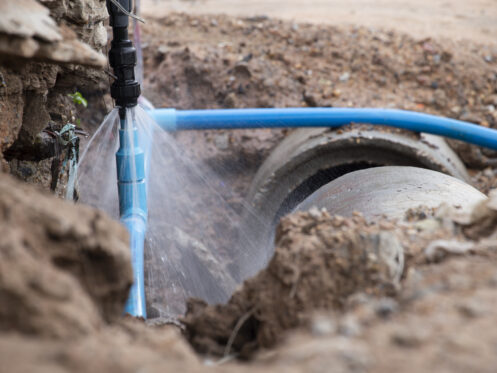
Your main water line connects to your municipal water supply or well system. Its job is to carry water from the source into your home while maintaining its potability. This is the water your family drinks and bathes in. While not a common occurrence, main water lines can develop leaks that waste water and money. Many such leaks develop because the water line is old and has deteriorated. Leaks can also occur due to soil movement, especially when the water table is unusually high. If a main water line leak occurs, a fast response is crucial. Let’s explore the key warning signs that you may have a small leak or even a massive rupture.
Low Water Pressure
A sudden loss of water pressure is often among the earliest signs of a main water line leak. That said, it’s important to recognize that there can be many other causes of low pressure as well. It can be due to temporary disruptions to your water service. Other potential causes include clogged aerators, faulty shutoff valves, and sediment in pipes. If you have a pressure-reducing valve (PRV), it can also be a sign that the PRV has malfunctioned.
Typically, a loss of pressure due to a main water line leak will affect your cold water but not your hot. You’ll also experience that reduced pressure throughout your home rather than from one or several fixtures. If you experience these symptoms, it’s a good idea to turn off your water supply via the shutoff valve. You can then check your water meter to see if water is still flowing. If it is, then you should call a plumber immediately for emergency service.
Sudden Water Quality Changes
Many water line leaks start off small and then worsen over time. A small leak may not result in pressure changes, but it can affect the quality of your water. Dirt or rust can get into your water supply, causing a brownish or reddish discoloration. You may also notice changes to the way your water smells, tastes, or feels. Don’t drink water that smells like rotten eggs, as that’s typically due to bacterial growth. If your water has an earthy or metallic taste, stop drinking it until you have a professional test it. It’s also important to note that not all water quality issues will be obvious. Leaks can lead to metals, bacteria, viruses, or parasites in your water. They can negatively affect your health but not necessarily change the way your water looks, smells, or tastes.
Increased Water Consumption and High Water Bills
Even a relatively minor main water line leak can add up over time. Pinhole-sized leaks can result in wasting over 250 gallons a day. Severe leaks can waste thousands of gallons of water daily. Homeowners should monitor their water consumption month to month and year to year. If a sudden, unexplained surge occurs, you know to call a plumber for an inspection. Some water companies allow customers to opt in for high usage alerts. Your water company may call you anyway if they notice very high usage above normal.
Fixture and Appliance Performance Issues
A lower flow of water can cause problems with your plumbing fixtures and water-using appliances. Faucets may sputter as if the aerator is clogged, even though it isn’t. It can lead to diminished water heater efficiency and unusual noises. You may notice air in water filters, including your refrigerator filter. Other signs include washing machines taking longer to fill up and dishwashers running for longer cycles and not cleaning as well.
Unusual Plumbing Noises
Depending on where the leak is, you may be able to hear running water outside or even inside your home. Small leaks can result in trickling and hissing sounds.
Wet Spots, Damp Soil, or Sinkholes
Small main water line leaks will often affect your landscape over time as it becomes more saturated. Don’t ignore damp soil, particularly during periods of no rain. A leak can also lead to wet spots and eventually sinkholes as it undermines the soil.
Puddles in Your Yard or Street
Unexplained, sudden puddles in your yard or on the street in front of your house generally indicate a significant rupture. Puddles near the street can suggest a service line issue. That may be the water company’s responsibility, depending on where the leak occurred.
Foundation Cracks
If the soil near the house becomes saturated, it can undermine the foundation. The foundation can sink or shift, resulting in cracks and other imperfections. If you notice any new or rapidly widening cracks, it’s important to schedule an inspection right away.
Water Intrusion
Homes that have crawl spaces or basements may experience water intrusion as the soil becomes saturated. You may notice dampness, high humidity, and other indoor air quality issues. Eventually, this can affect your living spaces through the stack effect. This is where negative air pressure pulls moisture and pollutants into the home.
Moisture, Mildew, or Mold Indoors
The stack effect is one reason you may experience moisture problems inside despite the leak being outside. If you can see or smell mold or mildew, it’s probably been present in your home for several weeks. The accumulation can be substantial by that point and have a negative effect on your family’s health.
Pest Infestations
Rodents, ants, cockroaches, and even termites can be drawn to the excess moisture in your yard. Those pests can undermine your soil further and, in the case of termites, cause structural damage.
What to Do: Diagnosis and Solutions
A plumber has advanced means to quickly and accurately diagnose main water leaks. Those include camera inspections, thermal imaging, and acoustic leak detection. A plumber can identify if there are issues with the municipal equipment, which your water company will have to fix. Any problems with your water line on your property are usually your responsibility.
If you have an older main water line, it’s generally best to replace it when a leak occurs. If the water line is relatively young and otherwise in good condition, repairs are often viable. There are both traditional trench and trenchless repair and replacement methods. The traditional approach is to excavate in order to repair or replace the main water line. Cured-in-place pipe (CIPP) lining is a trenchless rehabilitation technique suitable for main water lines. Pipe bursting is an effective trenchless main water line replacement method. A plumber may recommend trenchless solutions when excavation would require disrupting your hardscapes.
Main Water Line Solutions for Medina and the Surrounding Areas
Gene’s Refrigeration Heating & Air Conditioning, Plumbing & Electrical is a fully licensed and insured plumbing contractor located in Medina, OH. Our company has over 65 years of experience serving homeowners and businesses. Our plumbers perform main water line inspections, maintenance, repairs, and replacements. We offer both traditional trench and trenchless solutions. Our plumbers also install and service pressure regulators. To schedule a main water line inspection, call us today or book your appointment online.