
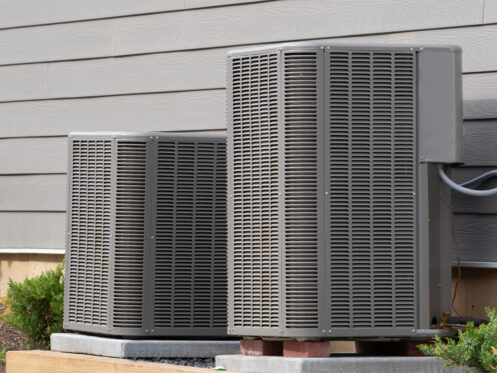
There’s much to consider when choosing an air conditioner for your Medina, OH home. In addition to seasonal energy efficiency ratio (SEER) ratings, capacity, and cost, you must account for the continued viability and environmental impact of AC refrigerants. The U.S. Environmental Protection Agency (EPA) has mandated a switch to AC refrigerants with a low global warming potential (GWP). In response, AC manufacturers have stopped using R-401a and are now building systems that rely on low-toxicity A2L refrigerants. Read on to learn what this means and how it’s impacting the marketplace in 2026.
It Happened Before, and It’s Happening Again
Puron and other R-401a refrigerant brands replaced Freon (R-22) as the industry standard in 2010. The EPA structured a budget-friendly phase-out of Freon that lasted 10 years. In 2020, with no domestic Freon production and no legal Freon importation, Freon-reliant air conditioners gradually became obsolete. Homeowners paid increasingly high costs to repair and recharge their outdated ACs, and manufacturers no longer offered them.
R-401a is undergoing a similar phaseout. This phaseout is occurring at an expedited rate. In 2026, AC manufacturers will not release any new R-401a air conditioners, and they’ll manufacture far fewer replacement parts. In fact, as per EPA regulations, the manufacture of new R-401a ACs ceased entirely as of January 1, 2025.
Why Is the EPA Phasing R-401a Out?
The R-401a phase-out affects all residential and light commercial air conditioners. It also impacts many heat pumps. The 2026 EPA phase-out also includes R-404a refrigerant and all R-404a-compatible cooling systems. Both refrigerant types were once deemed the best choice for the environment due to their greater efficiency and their zero Ozone Depletion Potential (ODP). Neither refrigerant type contains chlorine. As hydrofluorocarbons (HFCs), they don’t produce ozone-depleting hydrochlorofluorocarbons (HCFCs). In 2010, as per the EPA, this was a remarkable improvement from Freon, which produced both HFCs and HCFCs.
However, recent studies by the EPA found that although R-401a and R-404a don’t deplete the ozone, they do add greenhouse gases to the earth’s stratosphere. HFCs are now known to have a global warming potential that’s a hundred times greater than carbon dioxide. This discovery ended R-401a’s relatively short run as the industry standard for AC and heat pump refrigerant.
What A2L Refrigerants Are and How They Stack Up
The A2L refrigerants replacing R-401a and R-404a include R-454b and R-32. While R-401a, R-404a, and other A1 refrigerants are completely non-flammable, new A2L refrigerants are flammable, but have a low-flammability rating (the L = low-flammability). This designation makes new refrigerants unlikely to ignite, but it doesn’t negate the possibility. To further reduce the already nominal risk of ignition, new A2L air conditioners have greater built-in protection against refrigerant leaks.
A2L refrigerants aren’t just better for the natural environment. They’re also significantly more efficient than their predecessors. They can cool homes with fewer and shorter cooling cycles. This offers a 5% to 10% reduction in cooling-related energy use for energy bill savings and smaller carbon footprints.
The Impact on Existing ACs
Freon had a long run as the industry standard for residential and light commercial air conditioner refrigerant. For more than 50 years, Freon was the primary refrigerant for nearly all these cooling system types. The EPA’s phase-out came with pushback from many consumers due to uncertainty about higher costs, shorter equipment lifespans, and higher-pressure levels.
As R-401-a and R-404a air conditioners and heat pumps gradually became the norm, people came to enjoy their greater efficiency, enhanced efficacy, and surprisingly longer lifespans. Best of all, phasing out Freon did not require people to immediately get rid of their existing cooling equipment. The refrigerant phase-out of 2026 will look much the same.
If you have a relatively new air conditioner or heat pump in your home, you can continue enjoying your current cooling system until it reaches the end of its lifespan. Upon experiencing A2L ACs firsthand, consumers will find them safer, more efficient, and more enduring.
Qualified Technicians and Recharge Service
If your current AC or heat pump is 10 years old or older, there’s a good reason to start planning for replacement soon. During the earliest stage of refrigerant phase-outs, consumers maintain access to reasonably priced refrigerant recharge service. It’s also easy to find HVAC companies and technicians that are trained and licensed to handle newly obsolete refrigerant types.
The importation and domestic production of both R-401a and R-404a refrigerants ceased on December 1, 2019. As such, consumers and HVAC companies have access to finite, dwindling supplies of these refrigerants for recharge service. When demand rises, the price of the recharge service will increase.
Moving forward, HVAC technician training will largely focus on the safe handling of next-generation A2 refrigerants. While homeowners will still have access to qualified A2L technicians, it may become difficult to find them in the future. With manufacturers exclusively producing A2L air conditioners and fewer A1 air conditioner components, finding replacement parts for an aging air conditioner could prove challenging as well.
Why Retrofitting Isn’t Feasible
During the Freon phase-out, some homeowners expressed interest in retrofitting their existing air conditioners to accommodate new A1 refrigerants. However, these projects are costly, unsafe, and ultimately infeasible. They require full compressor replacements, and with the move to A2L refrigerants, they don’t account for low flammability. A2L refrigerants operate under different pressure levels and conditions. If possible, retrofitting would void all manufacturers’ warranties and create serious safety concerns.
What Should You Do Now?
The average lifespan of an air conditioner is 15 to 20 years. It’s estimated that many ACs lose more than half their efficiency after just one decade of service. Keeping your home’s cooling system compliant with the latest industry standards will boost its value and marketability. These are just a couple of reasons to consider replacing an aging AC in 2026, even if your A1 air conditioner is just 13 to 14 years old.
Signs Your Old AC Is Ready for Replacement
There’re are other signs that an aging air conditioner is ready for replacement. If you have hot and cold spots throughout your home, your AC is struggling to cool the entire building effectively. Poor indoor air quality (IAQ), recurring repairs, and the expiration of warranty protections are additional indications of the need for replacement.
Get a Professional Recommendation Today!
You can get a personalized recommendation on when to replace your A1 air conditioner from a licensed HVAC company. When making these recommendations, HVAC companies consider factors like age, performance, cumulative repair costs, and energy savings goals.
Gene’s Refrigeration Heating & Air Conditioning, Plumbing & Electrical proudly serves Medina and the surrounding communities with expert HVAC and IAQ services. We’re a top choice for heat pumps and air conditioners, refrigerant leak repairs, air duct cleaning, and more. As a Better Business Bureau (BBB)-accredited company, we maintain an A+ BBB rating. At Gene’s Refrigeration Heating & Air Conditioning, Plumbing & Electrical, we have a seasoned team of NATE-certified technicians, and we’re a Carrier Factory Authorized Dealer. To help our clients plan and pay for AC replacement, we offer financing on approved credit. For expert AC service or a personalized recommendation for AC replacement, contact Gene’s Refrigeration Heating & Air Conditioning, Plumbing & Electrical now!