
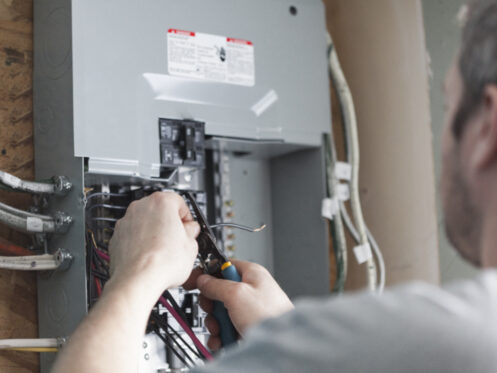
Your home’s electrical wiring works behind the walls every day, supplying power to lights, appliances, HVAC equipment, electronics, and other devices. Because most wiring is hidden, problems can develop without being immediately obvious. An older electrical system may also struggle to accommodate the demands of a modern household.
Whole-home rewiring replaces outdated, deteriorated, or inadequate wiring with a modern electrical system designed for today’s needs. It is a significant project, but in the right circumstances, rewiring can improve electrical safety, reliability, and capacity throughout your home.
Gene’s Refrigeration Heating & Air Conditioning, Plumbing & Electrical provides professional electrical services in Medina, OH, including whole-home rewiring, electrical upgrades, repairs, panel replacements, and other residential electrical solutions.
What Is Whole-Home Rewiring?
Whole-home rewiring involves replacing electrical wiring throughout most or all of a house. Depending on the property’s existing electrical system, electricians may replace old conductors, install properly grounded circuits, add new outlets, update switches, and make other improvements.
The project may also involve evaluating the electrical panel to determine whether it provides enough capacity for the updated system.
Not every electrical problem requires whole-home rewiring. A failed outlet or damaged switch, for example, may only require a localized repair. Rewiring becomes a consideration when problems are widespread, the existing wiring is outdated, or the home’s electrical infrastructure no longer meets household demands.
Your Home Has Old or Outdated Wiring
The age of your home can provide an important clue about the condition of its electrical system. Older houses were constructed when households used far fewer electrical appliances and devices.
Even if an older electrical system still works, portions may have deteriorated or been modified over the decades. Previous homeowners may have added outlets, appliances, or circuits at different times, potentially creating a mixture of old and new wiring.
Some older properties may also contain wiring methods or materials that do not provide the same features as modern electrical systems. A licensed electrician can evaluate the wiring and determine whether targeted repairs, upgrades, or more extensive replacement should be considered.
Your Circuit Breakers Trip Frequently
Circuit breakers are designed to interrupt power when electrical conditions become unsafe. An occasional trip can happen when too many devices operate on one circuit. Breakers that trip repeatedly deserve closer attention.
Frequent trips may indicate overloaded circuits, damaged wiring, faulty equipment, or another electrical problem. Simply resetting the breaker repeatedly does not address the cause.
Pay attention to whether the same breaker trips when you use particular appliances or whether problems occur throughout several areas of the home. Widespread circuit issues may indicate that the electrical system needs more than a simple repair.
Your Lights Flicker or Dim
A light that flickers because of a loose bulb is usually easy to correct. Lights that repeatedly flicker or dim, particularly when an appliance turns on, can point to a larger electrical concern.
Large appliances naturally draw more electricity when they start. However, noticeable dimming throughout the house may indicate that circuits or other electrical components are struggling with demand.
If the issue occurs frequently, have an electrician investigate rather than assuming it is normal for an older home.
Outlets or Switches Feel Warm
Outlets and switches generally should not become noticeably hot during ordinary use. Excess heat can be associated with loose connections, overloaded circuits, deteriorated components, or other electrical faults.
Discoloration around an outlet or switch is another warning sign. Dark marks, melted plastic, or a burning odor require prompt professional attention.
Contact an electrician if you notice electrical warning signs such as:
- Frequently tripped breakers
- Warm or discolored outlets
- Flickering or dimming lights
- Buzzing or crackling sounds
- Burning or unusual electrical odors
- Sparks from outlets or switches
- Repeated electrical problems in multiple rooms
If the problem appears to be limited to a receptacle, professional outlet repair or replacement may be enough. Gene’s notes that warm outlets, burning odors, discoloration, and crackling can indicate damaged wiring, loose connections, or overloaded circuits.
You Have Too Few Outlets
Older homes were not designed around today’s number of electronics. A modern household may have televisions, computers, kitchen appliances, chargers, entertainment equipment, smart-home devices, HVAC systems, and many other electrical loads operating simultaneously.
If you rely heavily on extension cords, outlet splitters, or power strips because there are not enough receptacles, your electrical system may no longer fit how you use your home.
Adding outlets can sometimes solve the problem without rewiring the entire property. However, widespread outlet shortages combined with aging wiring and limited circuit capacity may make a broader upgrade more practical.
Professional electrical outlet installation can add properly installed receptacles where your household needs them.
Your Outlets Are Not Grounded
Many older homes have two-prong outlets rather than modern three-prong receptacles. This may indicate that portions of the electrical system lack an equipment grounding conductor.
Grounding provides an important electrical safety function. Simply replacing a two-prong receptacle with a three-prong outlet does not automatically create a properly grounded circuit.
An electrician can determine how the existing system is wired and recommend appropriate upgrades. Depending on the home’s wiring, this may involve individual circuit improvements or broader rewiring. Gene’s also offers GFCI and AFCI outlet options designed to provide additional electrical protection in appropriate locations.
You Notice Burning Odors or Strange Sounds
Electrical problems can sometimes provide warning signs through sound or smell. Buzzing, sizzling, or crackling near an outlet, switch, light fixture, or electrical panel should not be ignored.
A persistent burning smell is another reason to take immediate action, especially if you cannot identify another source. Damaged wiring and loose electrical connections can generate heat.
If you can safely do so, turn off power to the affected circuit and contact a licensed electrician. These symptoms can indicate a localized electrical fault or a larger wiring problem that requires professional attention.
Your Electrical Panel Is Outdated or Overloaded
The wiring throughout the house is only one part of your electrical system. Your panel receives electricity and distributes it among the home’s circuits.
An older panel may not have enough capacity to accommodate modern appliances and equipment. Frequently tripped breakers, limited circuit space, or plans to add significant electrical loads can all be reasons to have the panel evaluated.
The condition of the panel becomes especially important during a whole-home rewiring project. New wiring should be supported by electrical equipment capable of safely meeting the home’s current and anticipated electrical demands.
You Are Planning a Major Renovation
Remodeling can be an ideal time to evaluate old wiring because walls, ceilings, and other areas may already be opened for construction.
Kitchen and bathroom renovations frequently involve new lighting, outlets, appliances, and dedicated circuits. Finishing a basement, building an addition, or substantially changing a floor plan can also increase electrical demand.
Instead of designing new electrical work around an outdated system, homeowners may benefit from determining whether older wiring should be replaced as part of the renovation.
This can also provide an opportunity to plan outlet locations, lighting, switches, dedicated circuits, and other electrical features around how you intend to use the renovated space.
You Are Adding High-Demand Electrical Equipment
Modern homes continue to add equipment that may require more electrical capacity. EV chargers, electric HVAC equipment, kitchen appliances, hot tubs, workshops, and other additions can significantly change a property’s electrical load.
Before installing new equipment, an electrician should determine whether the existing circuits and panel can safely accommodate it.
This is particularly important in an older home. Adding new high-demand equipment without evaluating the existing wiring may place additional stress on circuits that were never designed for today’s electrical loads.
Electrical Problems Keep Appearing in Different Areas
One faulty outlet usually does not justify rewiring an entire home. A pattern of electrical problems is different.
If you have already repaired multiple outlets, switches, circuits, or wiring issues and new problems continue appearing elsewhere, the underlying electrical system may be deteriorating.
At some point, repeatedly repairing individual sections can become less practical than addressing the aging system as a whole. An electrician can assess the wiring throughout the property and explain whether targeted repairs remain appropriate or whole-home rewiring makes more sense.
What Are the Benefits of Whole-Home Rewiring?
Rewiring is primarily about replacing an electrical system that is outdated, damaged, or inadequate. However, the project can also provide an opportunity to make the home’s electrical layout more useful.
Depending on your existing system and rewiring plan, potential benefits can include:
- Replacing deteriorated or outdated wiring
- Adding properly grounded circuits
- Increasing the number of convenient outlets
- Providing dedicated circuits for major appliances
- Reducing reliance on extension cords
- Supporting modern electrical equipment
- Correcting previous improper electrical modifications
- Improving overall electrical reliability
The exact scope should be based on a professional evaluation rather than assuming every older home requires the same upgrades.
Does Rewiring Mean You Also Need a New Electrical Panel?
Not necessarily. However, whole-home rewiring and panel capacity are closely connected.
Before rewiring, an electrician should evaluate the existing panel, available circuit spaces, service capacity, and the electrical demands of the household. If the panel is outdated or does not have sufficient capacity, replacing it at the same time may be recommended.
Coordinating wiring and panel improvements can help ensure the electrical system works together rather than updating the wiring while leaving another important component unable to meet the home’s needs.
How Do You Know If You Really Need Whole-Home Rewiring?
Do not make the decision based on the age of your home alone. Start with a professional evaluation of the electrical system.
A licensed electrician can inspect accessible wiring, outlets, switches, circuits, and the electrical panel. They can also consider renovations made over the years and your current electrical demands.
After evaluating the system, the electrician can determine whether the home needs isolated repairs, circuit upgrades, panel work, partial rewiring, or a complete rewiring project.
This approach helps homeowners address actual problems without replacing components unnecessarily.
Schedule Electrical Service in Medina, OH
Whole-home rewiring can be an important investment when aging or inadequate wiring no longer meets the needs of your household. Frequently tripped breakers, warm outlets, flickering lights, ungrounded receptacles, recurring electrical problems, and insufficient electrical capacity are all reasons to have the system professionally evaluated. Gene’s lists whole-home rewiring among its residential electrical services in Medina.
Gene’s Refrigeration Heating & Air Conditioning, Plumbing & Electrical has served Medina and Northeast Ohio since 1959. If you are concerned about outdated wiring or recurring electrical problems, contact Gene’s Refrigeration Heating & Air Conditioning, Plumbing & Electrical to have your electrical system evaluated and determine whether repairs, upgrades, or whole-home rewiring are appropriate for your home.